
Plans without the follow-up loop
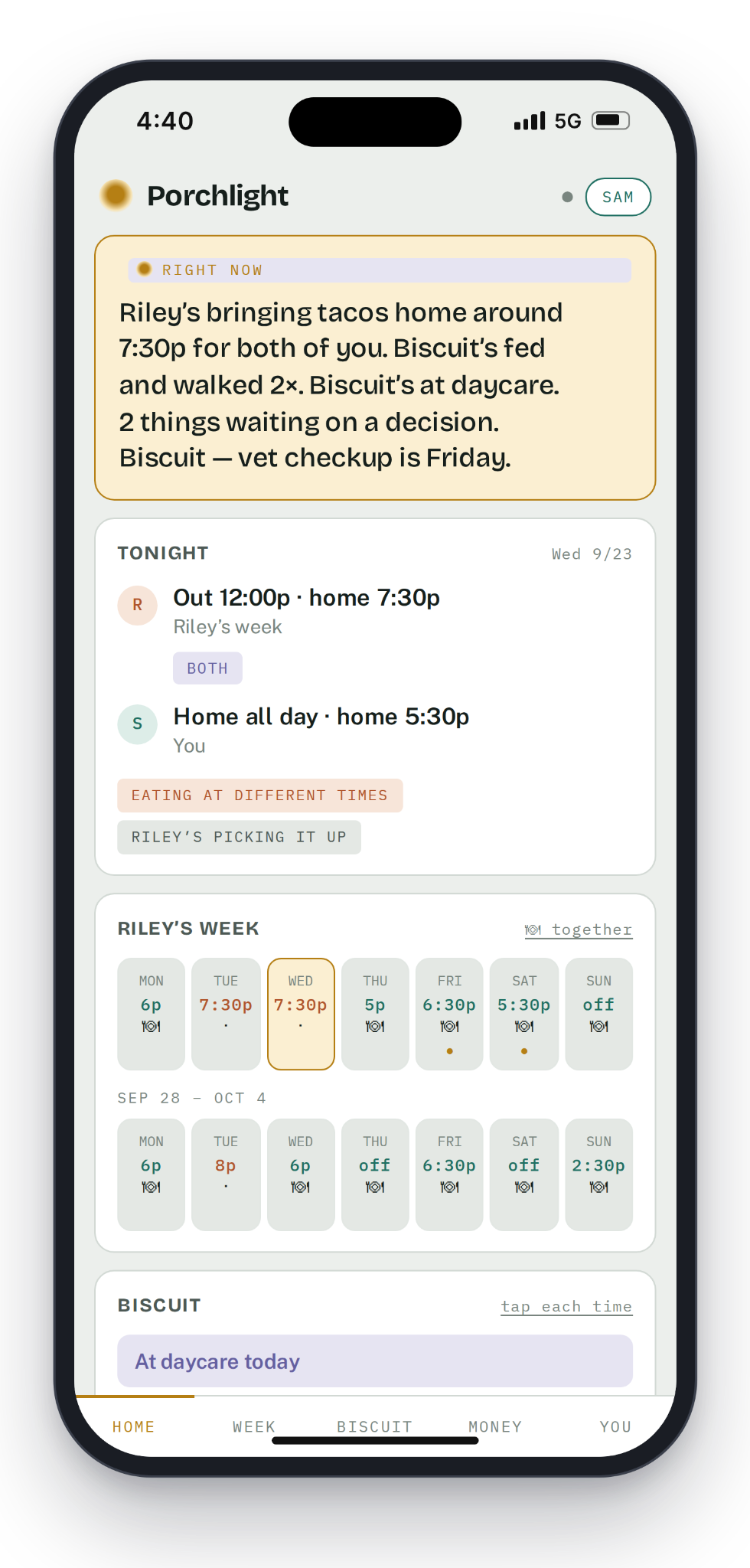
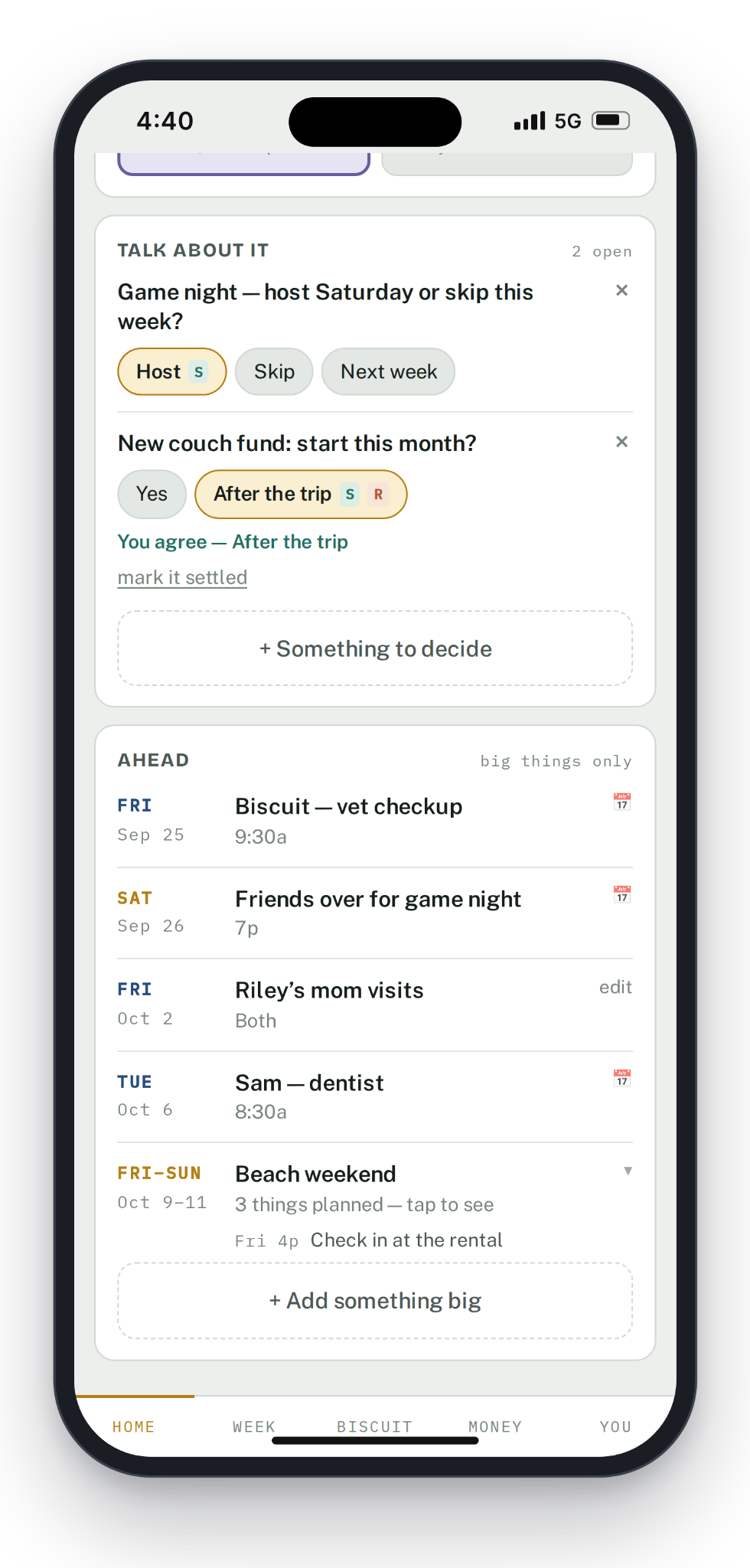
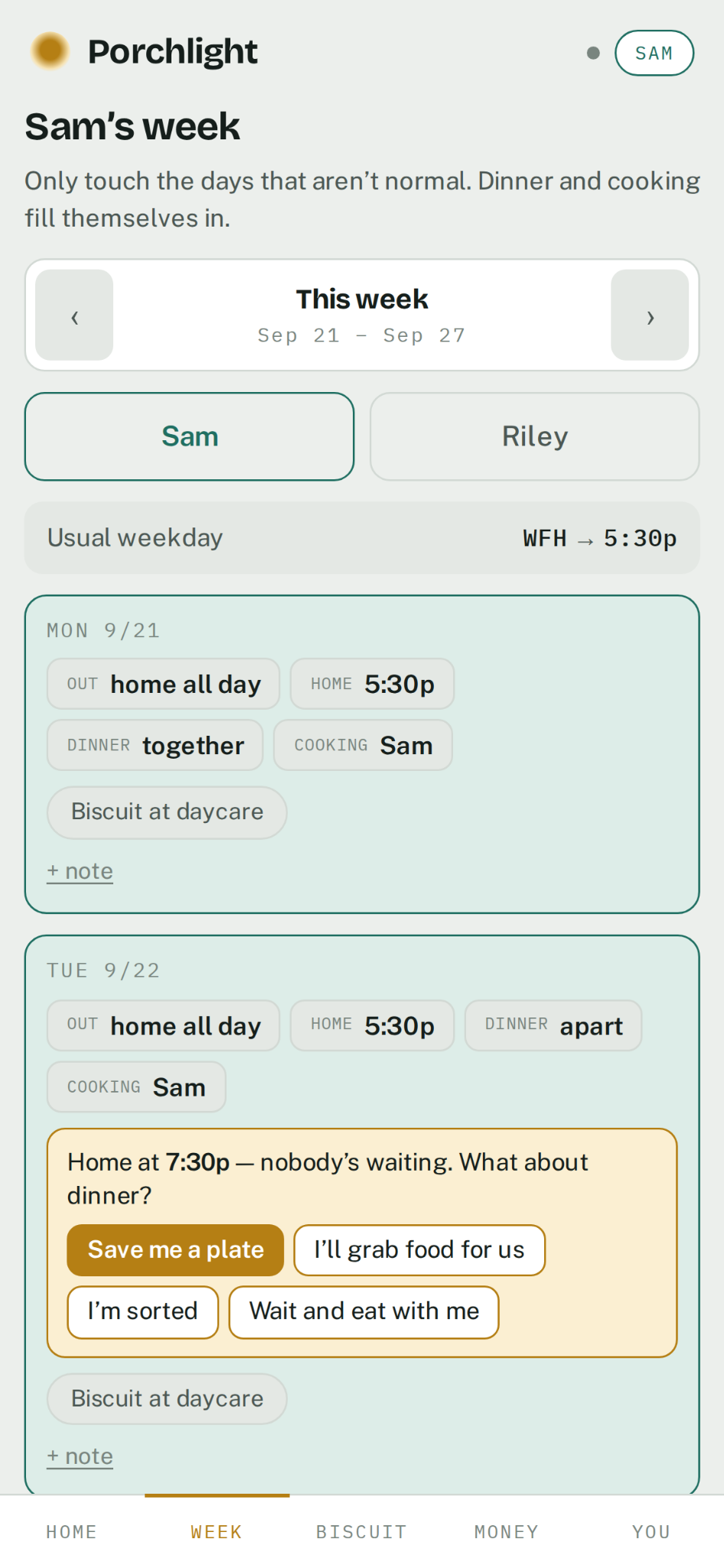
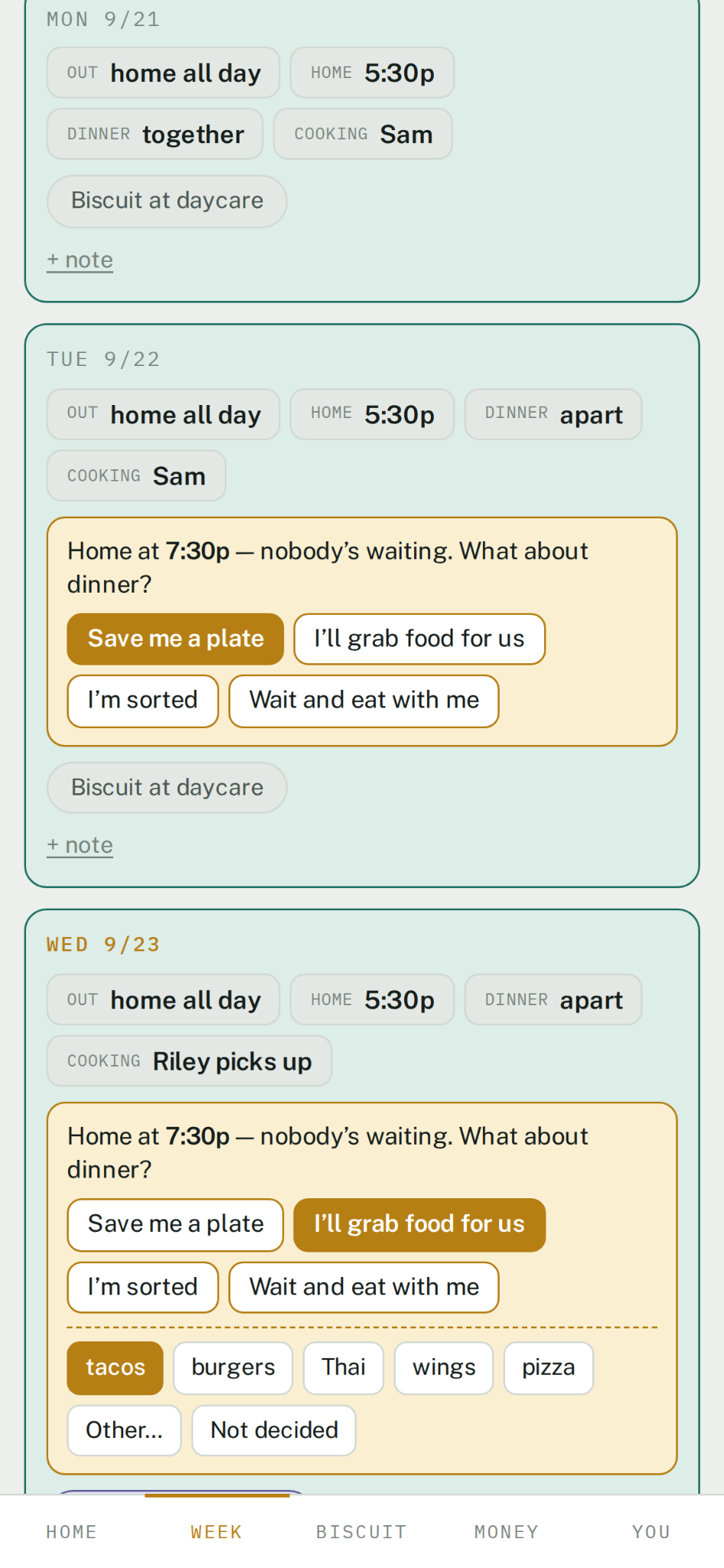
Shared calendar, upcoming events, weekly schedules, and dinner timing.
Building with AI · Case study
A household coordination app built from a prompt.
I built Porchlight to reduce the everyday coordination friction that happens across calendars, schedules, dinner decisions, shared expenses, pet care, and repeated check-ins. Starting from an initial prompt, I used AI-assisted development to move from problem to product decisions, working software, real-world testing, and rapid iteration.
Claude Cowork · GitHub · Supabase · Netlify
The problem
Household coordination is fragmented across calendars, texts, memory, bills, work schedules, pet responsibilities, and repeated questions. The information often exists. The work is finding it, interpreting it, and knowing who needs to act.
Product principle“Use existing signals. Reduce duplicate entry. Surface the next decision that matters.”
What I built
Shared calendar, upcoming events, weekly schedules, and dinner timing.
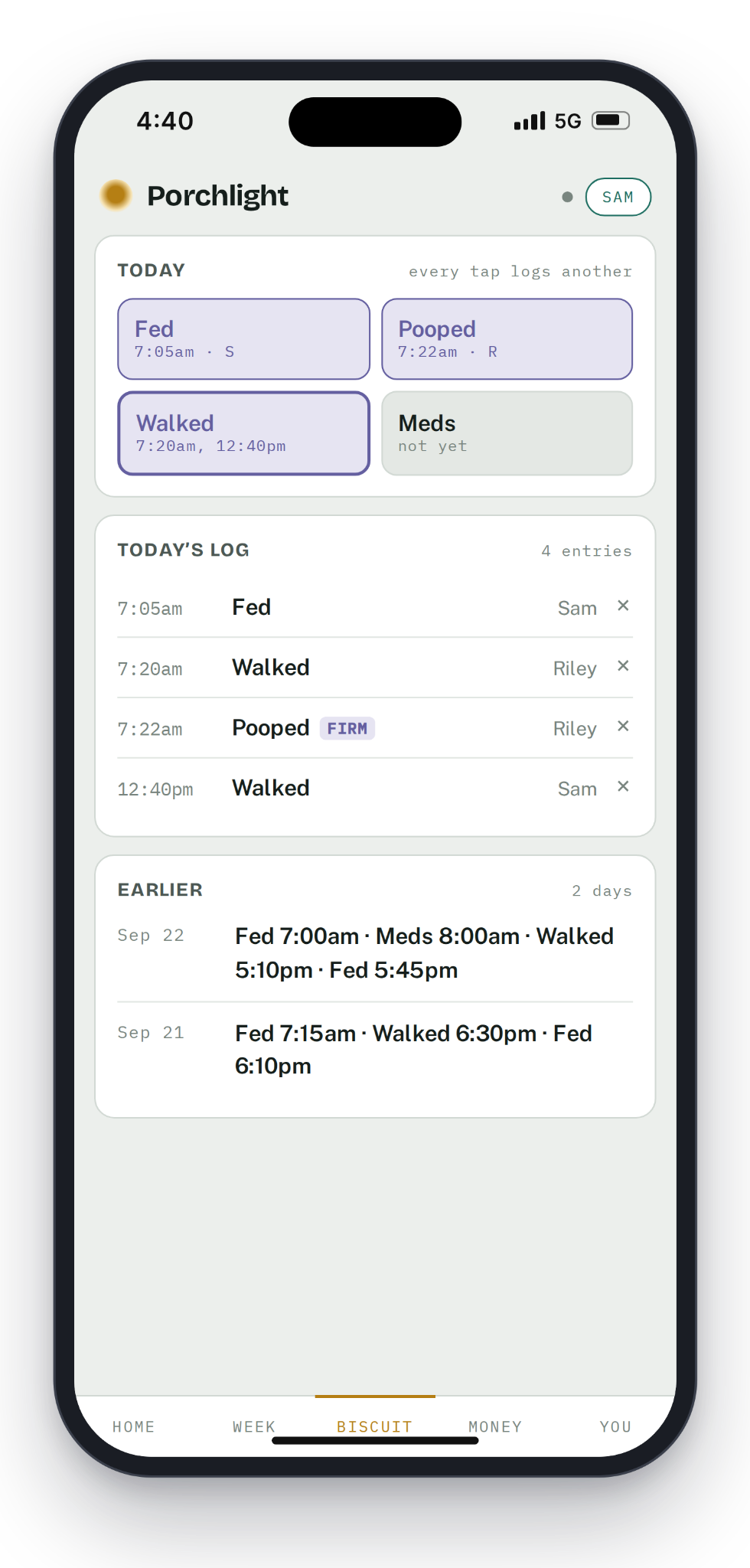
Feed, walk, medication, and health tracking with timestamps.
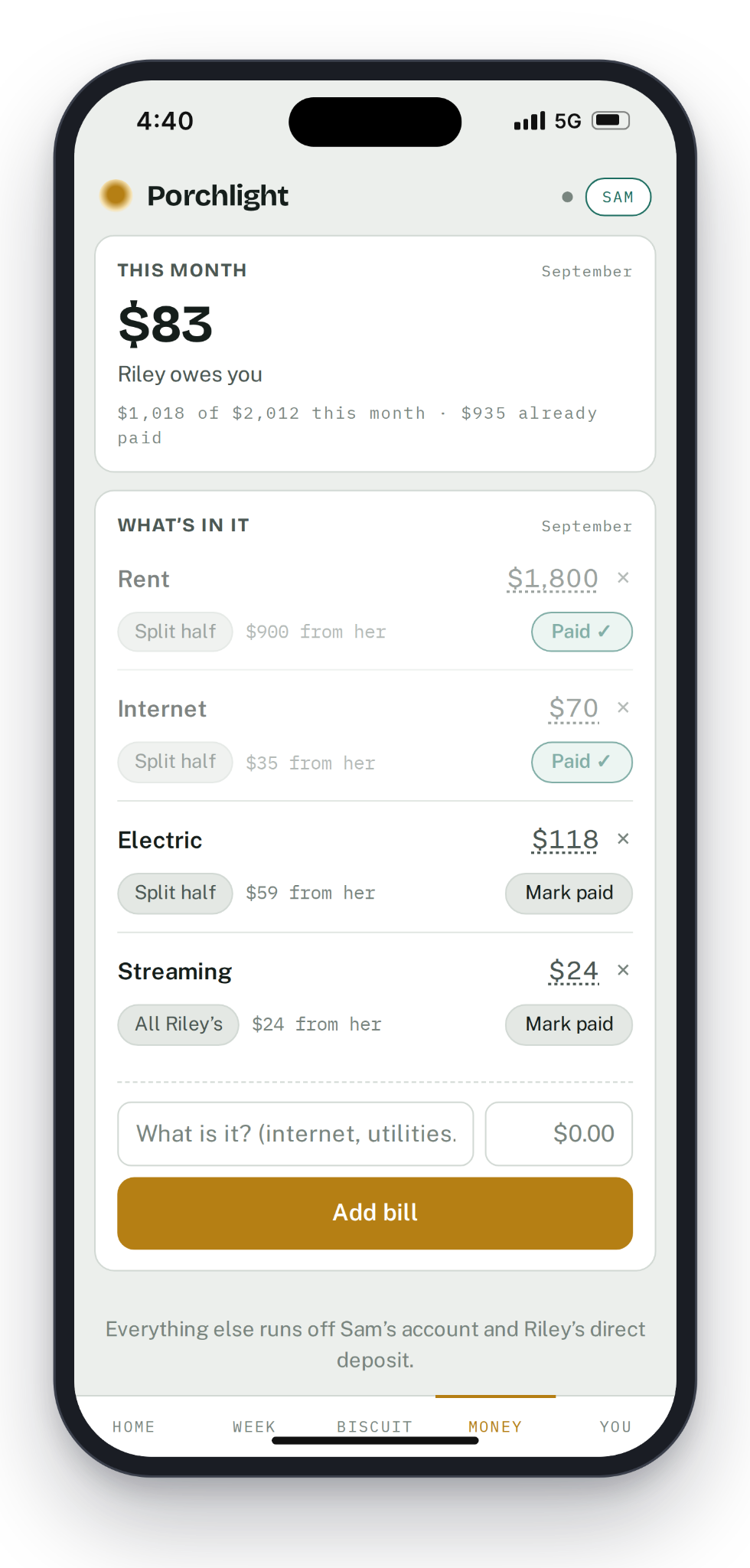
Expenses, split amounts, and payment status in one place.
Contextual prompts appear when someone needs to decide or act.
How I build with AI
I started with a problem and a prompt, then used Claude Cowork as an AI development partner. I translate real-life friction into product requirements, test the product in actual use, and iterate quickly. GitHub holds the codebase, Supabase provides the shared data layer, and Netlify handles deployment.
My role spans product manager, designer, QA, user researcher, and product owner. I am not outsourcing the product thinking to AI. I am using it to make decisions testable sooner.
Shipping velocity
“AI didn't replace product management. It shortened the distance between product thinking and product validation.”
Current status
Exploring whether Porchlight could eventually become a reusable household template for others.
Explore what else I'm building